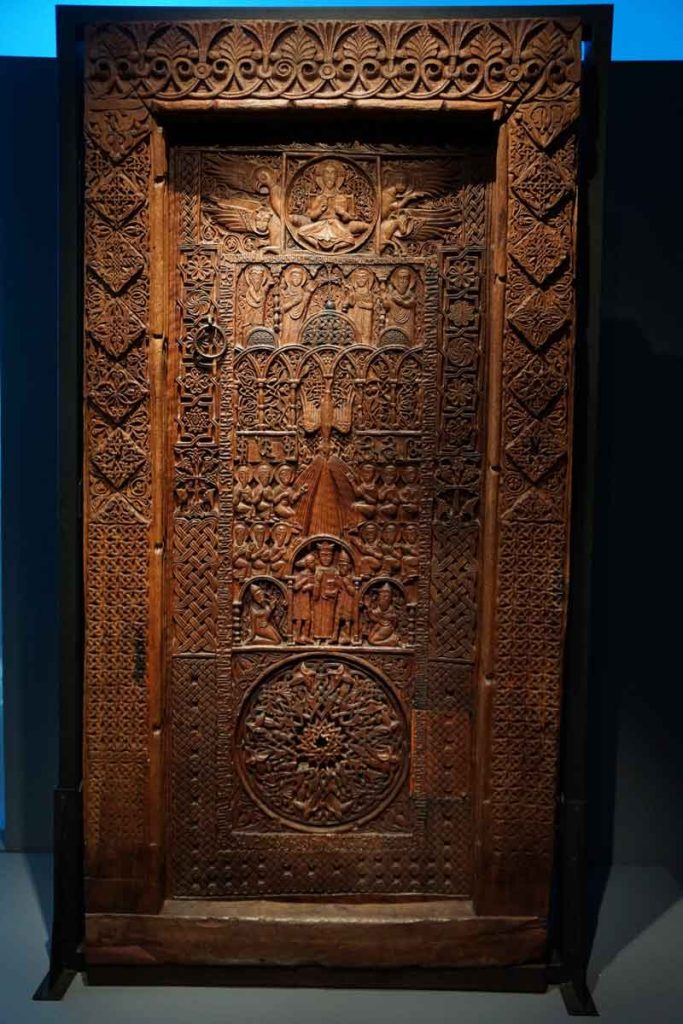
Faith Carved in Wood
In medieval Russia, wood was more than just a building material — it was a sacred medium that shaped the spiritual and cultural identity of a nation. From the vast forests of the Russian north emerged not only everyday dwellings and tools but also the magnificent wooden churches and carved crosses that defined Orthodox Christian devotion. Unlike the stone cathedrals of Western Europe, medieval Russia developed a unique tradition of timber architecture and religious craftsmanship, one that fused practical carpentry skills with deep symbolism.
The survival of these monuments, despite centuries of fire, weather, and political change, testifies to the extraordinary skill of medieval Russian woodworkers. Their work continues to inspire admiration, both as examples of advanced joinery techniques and as enduring symbols of faith.
The Craft of Wooden Churches
Timber as a Sacred Material
Russia’s forests provided abundant timber, particularly pine, spruce, fir, oak, and larch. For medieval carpenters, these woods were not chosen merely for availability but also for their symbolic and practical qualities. Oak, associated with strength and endurance, was often reserved for foundational beams. Larch, resistant to decay, was used in church construction where durability was essential.
In Orthodox thought, timber itself held a sacred quality. The wood of the cross, central to Christian salvation, gave deeper meaning to the use of wood in churches. To build in timber was to echo both biblical tradition and local identity, creating sanctuaries that merged heaven and earth through natural material.
Techniques of Medieval Russian Carpenters
Unlike stone masonry in Europe, Russian carpentry relied on log construction. Craftsmen used axes and adzes to hew massive logs, then joined them without nails. Instead, they employed dovetail joints, mortise-and-tenon connections, and wooden pegs, techniques that required precision but ensured structural stability.
The use of curved “ribs” in domes and shingled onion roofs demonstrated remarkable innovation. Every element was carved and fitted by hand, with tools that were simple in design but effective in skilled hands. The result was a style of architecture both practical in the northern climate and deeply expressive of Orthodox faith.
Masterpieces of Wooden Architecture
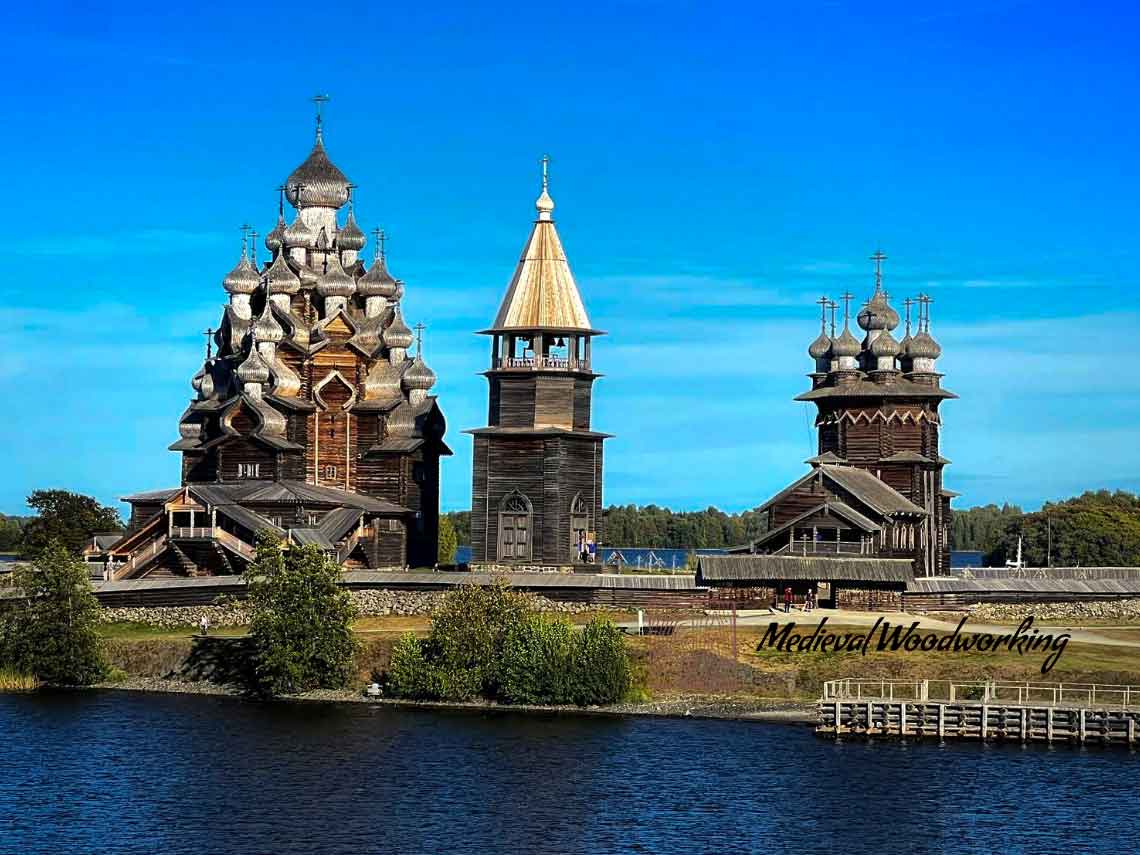
The pinnacle of this tradition is seen in masterpieces like the Church of the Transfiguration on Kizhi Island, built in 1714 without a single nail. Its twenty-two domes rise like flames of prayer, an astonishing feat of carpentry. While later than the medieval period, such churches are direct heirs of techniques perfected in earlier centuries in Novgorod and the northern principalities.
Even village churches, more modest in scale, displayed elegant craftsmanship. Their soaring roofs, intricate carvings, and sturdy log frames stood as focal points of faith in rural communities.
Wooden Crosses: Symbols of Devotion
Cross Carving Traditions in Russia
Alongside churches, wooden crosses occupied a central role in medieval Russian spirituality. Carved from oak or pine, they were placed at crossroads, village entrances, cemeteries, and monastic grounds. Some were simple, unadorned beams; others featured intricate carvings of saints, floral motifs, and inscriptions.
The Orthodox three-bar cross, with its distinctive slanted lower beam, was especially common. This design carried deep theological meaning, representing both Christ’s crucifixion and the balance of salvation and judgment.
From Village Shrines to Monastic Grounds
Wooden crosses could serve as community shrines, places of prayer in the open air, or memorials to significant events. In monastic settings, carved crosses marked sacred boundaries or burial grounds. Their presence extended the sacred landscape beyond church walls, reminding all who passed of faith’s centrality in daily life.
Symbolism in Orthodox Cross Design
For medieval Russians, the wooden cross was not merely a religious sign — it was a living symbol of protection and blessing. Its carving linked the labor of the craftsman with divine purpose. By shaping wood into the form of the cross, artisans united material skill with spiritual devotion.
Guilds, Communities, and Faith
Carpenters and woodworkers in medieval Russia were not simply tradesmen; they were often organized in local brotherhoods or loosely structured guild-like communities. Their skills were passed down through apprenticeship, blending technical mastery with an understanding of religious symbolism.
Patrons — whether princes, monasteries, or village councils — commissioned churches and crosses, but it was the craftsmen who brought these visions to life. In shaping timber into sanctuaries and symbols, they also shaped communal identity. Villagers saw in their churches not only a place of worship but also a collective achievement, crafted from the very forests that sustained them.
Continuity and Legacy
Wooden Churches as UNESCO Heritage
Many of Russia’s wooden churches have been recognized by UNESCO as treasures of world heritage. Sites like Kizhi Pogost preserve the legacy of medieval carpentry at its highest level. Despite vulnerability to fire and decay, these structures endure as living monuments to the artistry of timber building.
The Enduring Presence of Wooden Crosses
Though many medieval crosses have been lost to time, the tradition of carving and venerating them continues. Pilgrims still encounter roadside crosses in Russia, echoing centuries of devotion. Their presence is a reminder that faith, like wood, can endure when nurtured and renewed.
From Monumental to Personal Devotion
The tradition of wooden churches and crosses did not remain confined to monumental architecture. It extended into personal expressions of faith, where smaller wooden crosses were worn or kept at home as protective symbols. This continuity can be seen today in devotional items like the Orthodox Cross Necklace, which carries forward a practice rooted in the medieval world — wearing the cross as a sign of identity, blessing, and unbroken tradition.
Sacred Timber as Living Heritage
Medieval Russia’s wooden churches and crosses reveal a world where carpentry, faith, and community were inseparably linked. Through the hands of skilled craftsmen, ordinary timber became sacred architecture and enduring symbols of devotion.
The legacy of this tradition lives on — in UNESCO-protected monuments, in roadside shrines, and in personal symbols of Orthodox identity. To study medieval Russian woodworking is not only to explore an ancient craft but to enter a world where faith was literally carved in wood.