Doors as Symbols of Faith and Heritage
In Armenian culture, doors have long symbolized more than a boundary between spaces. They marked thresholds between the sacred and the everyday, protecting households, monasteries, and churches while displaying extraordinary artistry. For Armenians, a carved wooden door was not only a functional object but also an artistic canvas and a spiritual guardian.
In medieval Armenia, woodcarving reached remarkable heights, often seen in religious architecture. Though Armenia is more widely known for its khachkars — intricately carved stone crosses — its wooden doors reflect a parallel tradition of craftsmanship and symbolism. Preserved examples from the 15th and 16th centuries reveal a blending of faith, artistry, and cultural identity that continues to inspire admiration today.
Materials and Techniques of Armenian Woodcarving
Native Woods and Their Symbolism
Armenian craftsmen primarily used durable hardwoods such as walnut, oak, and apricot wood. Walnut was particularly prized for its density, rich color, and ability to hold intricate designs. Oak symbolized strength and endurance, while apricot wood, deeply connected to Armenian identity, carried symbolic meaning as a national tree.
Tools of the Craftsmen
Medieval Armenian woodworkers relied on chisels, mallets, knives, and gouges, often made by local blacksmiths. Each tool had a specific role, from shaping the broad panels to engraving delicate rosettes and interlacing designs. Mastery required both precision and deep understanding of the wood’s grain, as a single error could compromise the entire piece.
Techniques Passed Through Generations
Carving was often passed down through apprenticeships. Craftsmen developed methods of deep relief carving, producing bold three-dimensional motifs, as well as fine line engravings for inscriptions and delicate ornamentation. The combination of strength and subtlety gave Armenian wooden doors their distinctive aesthetic.
Symbolism in Armenian Wooden Doors
Crosses, Rosettes, and Geometric Patterns
Armenian doors frequently featured cross motifs, reinforcing their function as spiritual thresholds. Rosettes, symbolizing eternity, and interlaced geometric patterns adorned the panels, reflecting both Christian and regional artistic traditions. These designs offered both beauty and protection, guarding the sacred space within.
Flora and Fauna Motifs in Door Carvings
Vines, pomegranates, and grape clusters symbolized fertility, abundance, and eternal life. Occasionally, animal motifs appeared — lions for strength, doves for peace, or mythical creatures reflecting deeper layers of symbolism. Each carving turned the door into a visual narrative that reflected both faith and daily life.
Inscriptions and Sacred Texts
Some doors bore inscriptions in Armenian script, recording dates, donors, or dedicatory prayers. These written elements transformed doors into historical documents, anchoring them in time and community memory.
Wooden Doors in Monasteries and Churches
The most celebrated examples of Armenian wooden door art are found in monasteries and churches. Here, doors were carefully designed to reflect their sacred function, serving as gateways to divine presence.
Famous monastic complexes such as Etchmiadzin, Geghard, Haghpat, and Sanahin once featured carved wooden doors that highlighted the artistry of Armenian craftsmen. While many have been lost to fire, decay, or invasion, surviving examples show an extraordinary level of sophistication.
One of the most remarkable is the carved walnut wood door (1486) from the Church of the Holy Apostles at Lake Sevan, now preserved at the Metropolitan Museum of Art in New York City. This door, with its intricate geometric interlacing and Christian symbols, exemplifies late medieval Armenian woodcarving at its finest. Its survival outside Armenia ensures global recognition of Armenian craftsmanship, yet it also serves as a poignant reminder of cultural heritage displaced from its homeland.
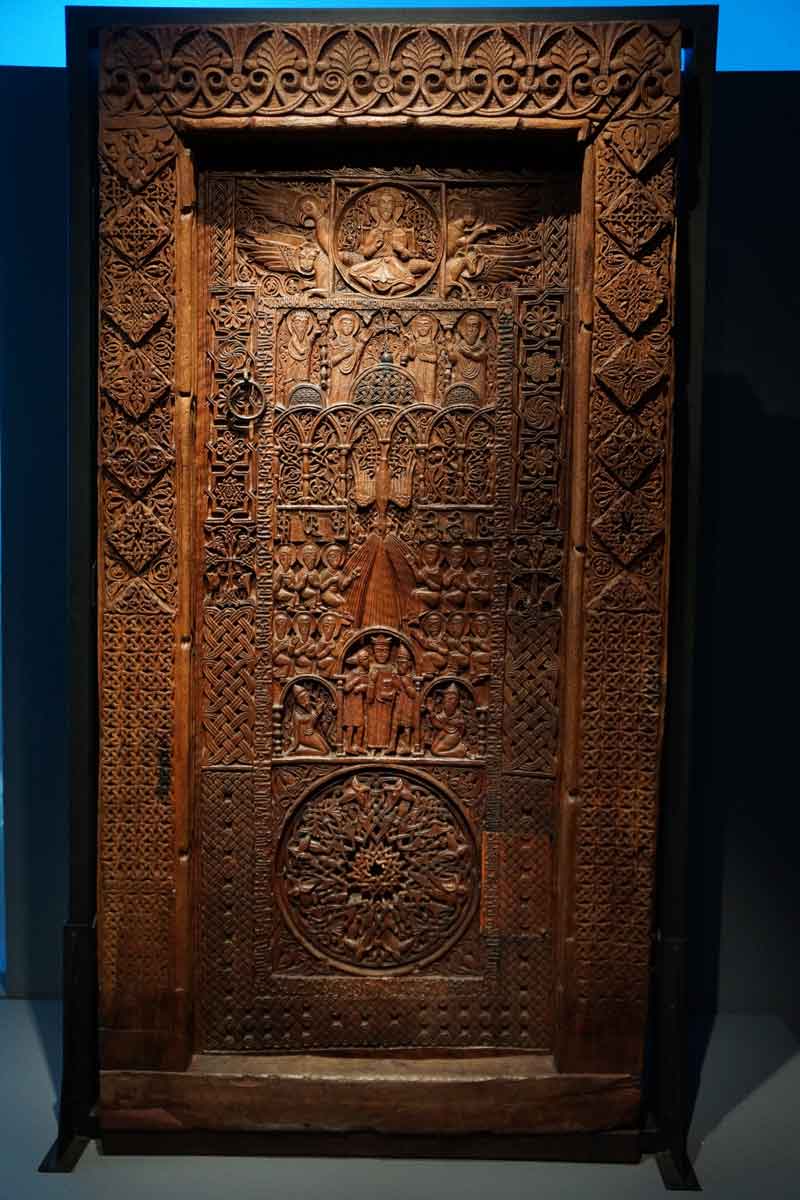
This example demonstrates how Armenian woodcarvers combined technical skill with spiritual vision, producing works that endure as cultural treasures centuries later.
Beyond the Sacred: Wooden Doors in Armenian Homes
Although religious architecture preserves the most celebrated doors, wooden doors were equally significant in Armenian domestic life. In villages and urban centers, the main door of a household often reflected social status and cultural values.
Carved motifs such as rosettes, vines, and protective crosses adorned home entrances, blending artistry with function. These doors served as symbols of hospitality, welcoming guests while safeguarding families. Wealthier households displayed more elaborate carvings, while simpler designs appeared in rural homes, yet all carried layers of symbolic meaning.
Preservation and Legacy of Armenian Door Art
Surviving Medieval Examples
Many medieval wooden doors in Armenia were lost due to invasions, earthquakes, and the fragility of wood itself. However, examples preserved in museums and churches provide invaluable insights into the tradition. The 1486 Sevan door, along with others scattered across Armenian monasteries and diaspora collections, testifies to the enduring artistry of Armenian craftsmen.
Restoration Efforts in Armenia and the Diaspora
Modern conservationists and artisans are working to preserve existing wooden doors, often combining traditional techniques with modern restoration methods. These efforts highlight the importance of safeguarding Armenian heritage not only in stone but also in wood.
Continuing Traditions in Modern Woodworking and Design
Contemporary Armenian artists and woodworkers continue to draw inspiration from medieval doors. Replicas, restorations, and even modern furniture incorporate motifs such as interlacing patterns, rosettes, and grapevine carvings. In this way, the tradition remains alive, bridging past and present.
Conclusion: Carved in Faith, Preserved in Time
Armenian wooden doors are more than architectural elements — they are guardians of faith, identity, and artistry. Carved with crosses, rosettes, vines, and inscriptions, they remind us of the deep connection between material craft and spiritual life.
From the monasteries of medieval Armenia to museum halls in New York, these doors continue to inspire admiration for their craftsmanship and meaning. They stand as silent witnesses to centuries of history, carved in faith and preserved in time.